Saturday, November 21, 2015

MIRCHI KA SALAN / GREEN CHILLI CURRY....


The first thing that crosses the mind of any westerner when they think about Indian food is ‘How spicy is it going to be?’ Mirchi ka salan is an authentic Indian curry in which chilly is the key ingredient, But  the addition of  other ingredients such as sesame seeds, peanuts, yogurt and coconut  helps to tone down the heat of the green chillies used in the curry.
Mirchi ka salan is a popular Hyderabadi dish, served as a side for Biryani. This dish stands out when compared to others with its unique hot and creamy flavor. It is a time consuming dish but the flavours of this dish make it worth the wait. This dish is special to three of us since it takes us back to our Hyderabadi memories !!

Let’s get started!!!!!

Ingredients:


The Roast mix

  • Peanuts – 2 tbsp
  • Sesame seeds – 1 tbsp
  • Coconut – 1 tbsp


The Gravy mix

  • Oil – 1 tbsp
  • Red chillies – 2 broken roughly
  • Mustard seeds – 1 tsp
  • Curry leaves – 6-8 leaves
  • Onions – 2 Medium finely chopped
  • Salt – As needed
  • Turmeric – 1 tsp
  • Ginger garlic paste – 1 tbsp
  • Red chilli powder – 1 tsp
  • Coriander powder – 1 tbsp
  • Cumin powder – 1 tsp
  • Coriander – Chopped finely
  • Yogurt – ½ Cup beaten
  • Jaggery
  • Green Chillies – 6-8 ( as per required)


Method
Slit the green chillies in the middle and remove the seeds. When they are dry add them to oil and fry till they look little lighter shade.


Dry roast the peanuts in a medium flame. When the peanuts are roasted, add the sesame seeds. When the sesame seeds are golden brown, add coconut. Keep an eye on this. It gets burnt easily. Make a fine paste with this mix. Add water as required.


Now add oil in a pan, when it's hot enough add mustard seeds and wait for the mustard seeds to crackle. Add curry leaves & onions and cook till they are golden brown. 


Add red chilly, turmeric, cumin powder, red chilli powder, coriander powder and ginger garlic paste along with salt, cook until the raw smell is gone.


Now add the dry roast paste to this mix. Fry for two to three minute and then add some water to it. Cook till it boils, for about fifteen minutes. Stir in between till the oil oozes out nicely.
Add coriander leaves. Boil for two minutes.


Add the beaten yogurt and simmer for another ten minutes. When it oozes out oil again add the fried green chillies and jaggery to the gravy and let it cook for 5 mins so that the juices of the gravy get absorbed by the chilies.


And its ready to serve ...


Notes
  • Yogurt can be replaced by 2 medium size tomatoes. 
  • You can also add tamarind juice in this recipe if you have a liking for tangy taste. 
  • You can use any kind of chillies but make sure you de seed them. Here we have used 2 different types.(oil your hands when removing the seeds  from chili)
  • We can use sugar instead of jaggery.
  • Add water on how thick you want your gravy to be.
  • When you are dry roasting the mix make sure it's on medium flame as it gets roasted quickly and may get burnt if on high flame.
  • Don't let the dry roast mix stick to your pan, so keep mixing till it’s cooked.


Mirchi ka salan is very similar to Bahara Baingan, except you add chillies instead of eggplant and also add curd. This dish has lots of flavors and stands out because of its spicy tangy & creamy flavor all put together in one dish. When tasted with biryani you can feel all the flavours burst into your mouth. It can also be served with Roti, Naan, phulka or Jeera rice.


Happy Roasting !!!

Tuesday, November 10, 2015

Diwali Memories - Festival of Lights!!!!


Growing up in India our earliest memories of Diwali are of the schools being closed for this National holiday and the celebrations being loud and full of pomp.
Although historically Diwali was celebrated to mark the victory of Lord Ram over the Demon Narakasura and to welcome him home after his 14 years of exile, in most of our houses the festivities began months in advance with our parents discussing with relatives or friends about the best places for Diwali shopping. It usually started a week before with cleaning the house, making snacks like Kara Boondi and sweets like motichoor ladoo, barfi, rabri and
many more.On Diwali day, the festivities were evident everywhere with dozens of bright oil lamps that lined our house entrances and colourful and intricate rangoli patterns that adorned the front of our houses. It was that time of the year when friends and family visited each other, exchanged gifts and greetings. We even looked forward to the frenzy around in our locality to see the decorations of other houses and have competition with neighbours rangoli and for bursting crackers.


However in this fast paced world, the meaning of this festival has changed. It is spent with people sitting in front of TV or on mobile phones, forgetting that festival is a day to celebrate and spend time with family and friends. The worst case is even making sweets and snacks for festivals has been outsourced, whereas our mothers and aunties would sit together and make sweets for the whole family and we (children) couldn't wait to get our hands on it.These festivals were a chase and a reason for people to gather together and spend quality family time, even misunderstandings would be cleared and friendships were renewed. But nowadays it’s just another holiday for most of them.


For us the essence of Diwali changed dramatically since we moved out of our country a few years back. Since Diwali was so ubiquitously celebrated with great gusto across the homes of our friends and family, we miss being a part of it now. Suddenly the day that was so important to us became like any other day. Our elaborate celebrations were cut down to a day or just the weekends (as we don’t have holiday on Diwali). We understood that it is up to us  as to how much or how little of the tradition we upheld. But more surprisingly, we realized it really mattered to us and we would do anything so that our Diwali here would be as magical as it was back home to keep the tradition going.  However, preserving our tradition has been quite an adjustment, since either some of the ingredients aren’t easily available or diyas are not as authentic as we find in India. Finally, in our efforts to recreate our own vision of diwali this year we have been decorating our apartments/homes with what little things we have, making Goddess laxmi's feet at our door entrance, lighting up a diyas,  trying to make the sweets and snacks (which BTW never turned out to be perfect like our mothers :( ) and arranging the perfect family meal.


At the end of the day, the festival is about celebrating the triumph of overcoming challenges. We may not have overcome a mythical 14-year battle but have indulged in much creative maneuvering to celebrate it as authentically and enthusiastically as we did back home.
No matter where you are, celebrating light, love and joy, can be done from anywhere.
Happy Diwali!!!!!


Saturday, October 31, 2015

DIY manicure & pedicure at home like a pro !!!!


Doing a pedicure by yourself is no rocket science. All you need is the right method & the right products for pampering and the time… and for those days when we don’t have the time for fancy soaks and scrubs we want to get the job done FAST.


Place all your implements, files and supplies on a terry towel within easy reach. You will be following the same type of procedures as with a manicure, although the files you will use will be a different grit as the toenails are generally thicker than the fingernails . You will also need to use your toenail nippers. Doing your own pediceure or manicure with these simple steps will definetly give you spa like feeling. The procedure is the same for manicure or pedicure.
OK let’s get started
Soak your feet: fill the tub with hot water,Sprinkle body salt or add squirt of bubble bath or shampoo to soak your feet.Drops of oil(optional) soak your feet for 15-20 min .This  will soften the dry & dead skin.


Scrub your feet : This is also the time when you need to pick up the pumice stone and scrub your feet. Just be a little gentle. Remove your feet from the soaking tub. To remove the dead cells you could use any mild body scrub or make a DIY Scrub. Massage using medium pressure with the scrub for 5-10 min or more. You can also use a scrub brush for a deeper scrub. Make sure  to concentrate on places like heels and other places where skin looks dry and tough. Wash off your feet and pat dry.repeat the same for the other foot.

Cleaning up cuticles: Now using a nail cleaner scrape of the cuticle from your toenail. Using a standard nail clipper, cut your nails and then a nail filer to shape them as per your desire.do not put your foot back in to the water.


Moisturize: Apply a moisturiser of your choice, body butter or feet cream. By now your feet should be soft & smooth.

Last but not the least, let your toes air dry well before you apply your choice of nail paint colour..

Tada your feet are ready to rock the party …


Happy Pedicure Day!!!!

Sunday, October 25, 2015

Homemade Rasam Powder and Rasam


Rasam is a traditional South Indian soup, mostly served with rice. A south Indian meal is incomplete without having rasam. It is usually served after sambar (another south Indian broth) but it can also be had after all the heavy food mainly because it is good for digestion. It is the most comforting, simple yet delicious dish. After a long trip abroad where we hardly get Indian food, rasam, rice and chips or pickle as a side is heaven for most south Indians. This recipe has different names in different places. The one we are going to share is a traditional Tamilnadu style rasam, made in every household  almost on a daily basis.

These days we get rasam powder in store, but nothing can beat the freshly ground spice powder made at home. It is a very versatile dish and takes the flavour of the ingredient added to it. Today we are sharing a homemade rasam powder and a traditional rasam recipe with you.


Rasam powder
Ingredients:
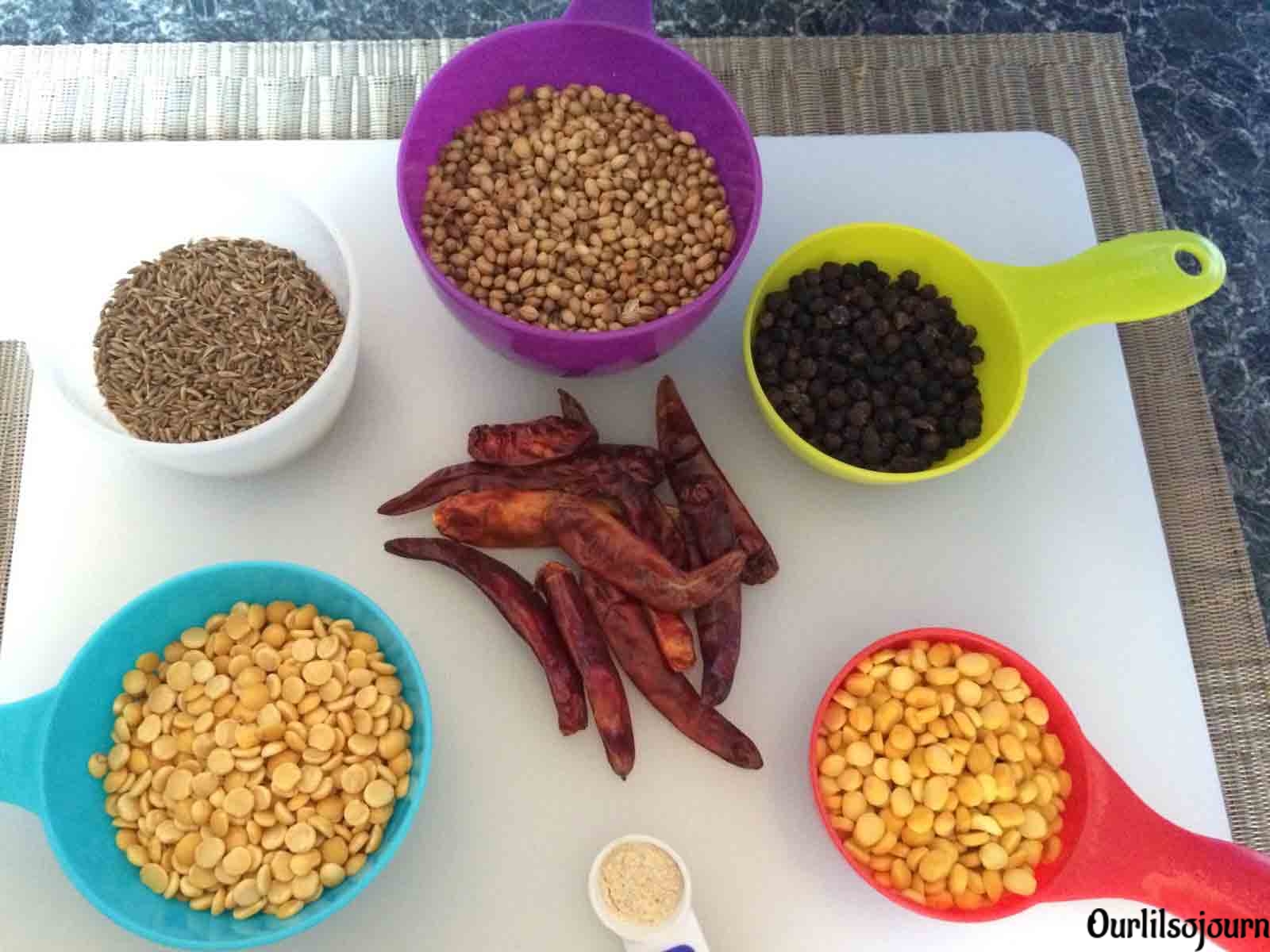
Coriander seeds - 3/4 cup
Red chilli  - 10
Toor dal - 1/4 cup
Channa dal - 1/4 cup
Black pepper - 3 tbsp
Cumin seeds - 3 tbsp
Hing - 1/2 tsp


Method:
1. Dry roast channa dal and toor dal first in medium flame until the dals turn golden in colour.
2. Similarly dry roast coriander seeds, pepper and cumin seeds until a nice aroma comes from the spices.
3. Lastly add dry chilli and dry roast till it is crisp.
4. Transfer everything to a plate and let them cool down completely.
5. Grind to a fine powder in a mixer
6. Store it in an airtight container.


Rasam


Rasam Recipe

Ingredients:
Tamarind - gooseberry size
Tomato - 1 small
Garlic- 1 clove (optional)
Green chilli- 1 slit
Toor Dal -¼  cup cooked
Turmeric powder - a pinch
Rasam powder - 2 tbsp
Coriander leaves - 1 tbsp finely chopped
Salt - to taste
sugar - 1/2 tsp (optional)


To temper:
Oil  or ghee - 2 tsp
Mustard seeds - 1 tsp
Curry Leaves - a small sprig
hing-a pinch


Method:
1. Soak tamarind in 2 cups of hot water for 10 mins, set aside.
2. In a kadai/deep pot heat a tsp of oil add chopped tomatoes and turmeric powder saute till raw smell of tomatoes leaves.
3. Add the tamarind juice to the kadai and let it boil for 2 min. Add a pinch of hing and salt while it boils. The raw smell of tamarind should go away.
4. Add rasam powder and allow it to simmer for a min. Then add the toor dal water to it.
5. Meanwhile in a small pan add a tsp of oil and after it heats up add the things under temper.
6. Add a tsp of sugar to the boiling rasam .
7. Immediately add the temper to the rasam and mix it well and switch of the rasam.
8. Garnish with the coriander leaves.
9. Serve hot with rice.


This recipe will come in handy on days when you come back from a big shopping and have to get food on the table fast or as a quick fix on lazy days when you really don’t want to be in the kitchen. Don’t forget yummy potato chips for the side.

Tips:
*When you start seeing brown foam on the surface of the rasam that means it's done
*You can garnish with mint leaves instead of coriander and Voila it gives you Mint rasam.

Happy Relishing Rasam!

Saturday, October 17, 2015

Grocery Shopping list for an Indian Household abroad!!

One of the  biggest challenges we commonly face when we move abroad to start our own household is organizing our grocery shopping list. There are few things which we need on a weekly basis and few on a monthly basis. In most countries we don't find requirements needed for an Indian household, especially for an Indian kitchen in  local supermarkets. Therefore, a pretty organised shopping list is a must as when going to the Indian store as in most cases the Indian stores are not located at every nook and corner. Another common hindrance living abroad, especially in cold countries, is a routine visit even to the local grocery store can be a big ask in winters. Believe us, running back and forth in the biting cold can sometimes make you go crazy. So it is essential to jot down things on a list so that you don't forget something and keep running to the store every now and then.
It takes a while to make a proper grocery list for a family, because we have to note what we eat, use and need frequently. But once you get a hang of it, then it's time to look for offers and price cuts etc., to save money on your grocery bills. So below we have made a master list with requirements we feel are needed for an Indian household. You can download this list and edit them to suit your needs. Grocery List When you start living abroad, there are few things which you start buying which you wouldn't have bought in India, like toilet tissues, pita bread, different varieties of pasta etc.,. See this list for shopping in your local grocery store.

Indian stores abroad make sure you don't miss your favourite Indian stuff away from home. To make a clear list before going to the Indian store look into this list and you might find it helpful.

Although household items are not a regular buy, it is still important you have them stocked them up so that you don't end up one day without your toothpaste or searching for batteries for your TV remote. Look further in this list.


Tips:
1.You can usually see in the milk section bottles with different expiry date. Try to buy milk with farthest expiry dates.
2. When in offer, if you use the product regularly,buy in bulk as it is a big save. Don’t  buy things just because it’s in offer and if you hardly use it.
3. Apps such as “mysupermarket” helps in finding offers and compares prices of items in your local supermarkets.
    Finally, we would like to conclude that the different things which you get in Indian and local grocery stores might vary from country to country. So do a round of the stores and get acquainted with what you get where and which is reasonably priced and then start buying things for your pantry. 
Happy Grocery Shopping!!!

Saturday, October 10, 2015

Vegetable Kurma/Korma


Kurma (as said in South India) or korma (as said in North India ) is a thick gravy made with vegetables or meat, usually served as a side dish for rice or roti. The main difference between a normal curry and korma is the addition of whole spices. There are different types of korma and the flavor of the korma completely depends on the ingredients used. Each state in India has its own take on korma. In the south, the richness is enhanced by using coconut milk whereas in the north, nuts like almond, cashew and even yoghurt is also used to make the gravy mouthwatering. Today we are sharing a basic South Indian  korma recipe and from this starts our korma journey as we will post different styles in future.


Prep time : 15 min  Cooking time : 20 min
Ingredients:
Bay leaf - 1

Cloves - 2
Cardamom-  1
Chilli powder - 1 tbsp
Coriander powder - 1 tbsp
Cumin seed - 2 tsp
Aniseed - 1 tsp
Mint - 1 tbsp chopped
Onion - 2 sliced
Tomatoes - 2 diced
Potato - 1 diced
Carrots - 1 diced
Beans - half cup chopped
Cauliflower - 1 cup chopped
Capsicum - half cup chopped
Green chilli -1 slit
Salt
Oil

Method:


1. Heat a wide pan and add oil . Add bay leaf, cloves, cardamom, cumin and aniseed, let it splutter.
2. Then add sliced onions and saute till it softens.
3. When onion turns golden brown add ginger garlic paste and green chilly.
4. Saute till oil separates and then add tomatoes.
5. After the tomatoes turn mushy add salt, chili powder and coriander powder.
6. Mix everything well and cook till oil separates and then add vegetables and chopped mint leaves and cook till they are half done.
7. Add water until vegetables are immersed in water and mix everything well.
8. Close with a lid and cook till the vegetables are cooked.
9. Open the lid and cook till oil floats and switch off. Serve with hot rice or roti

Notes: 

1. You can use any vegetables of your choice or use frozen vegetables.
2. You can  add coconut milk instead of water to make the gravy rich and creamy.
3. Adjust spice levels according to your taste
4. You can also cook this curry in pressure cooker.
5. Meat lovers can add meat with the vegetables. 

 This south Indian version of korma makes an excellent ‘masaledar’ side dish for rice, puris, appam, etc., When we first came abroad all the Indian takeaways main order was korma, which surprised us knowing how many people enjoy this delicious gravy. So dear friends before you grab your phones to order take away, grab your aprons and try this recipe, we promise you and your family will enjoy it.


Happy Korma journey!


"Sun"torini - a place worth all the hype

Santorini, one of the most popular greek islands, is a place which is probably on every traveller’s bucket list. The innumerable i...